
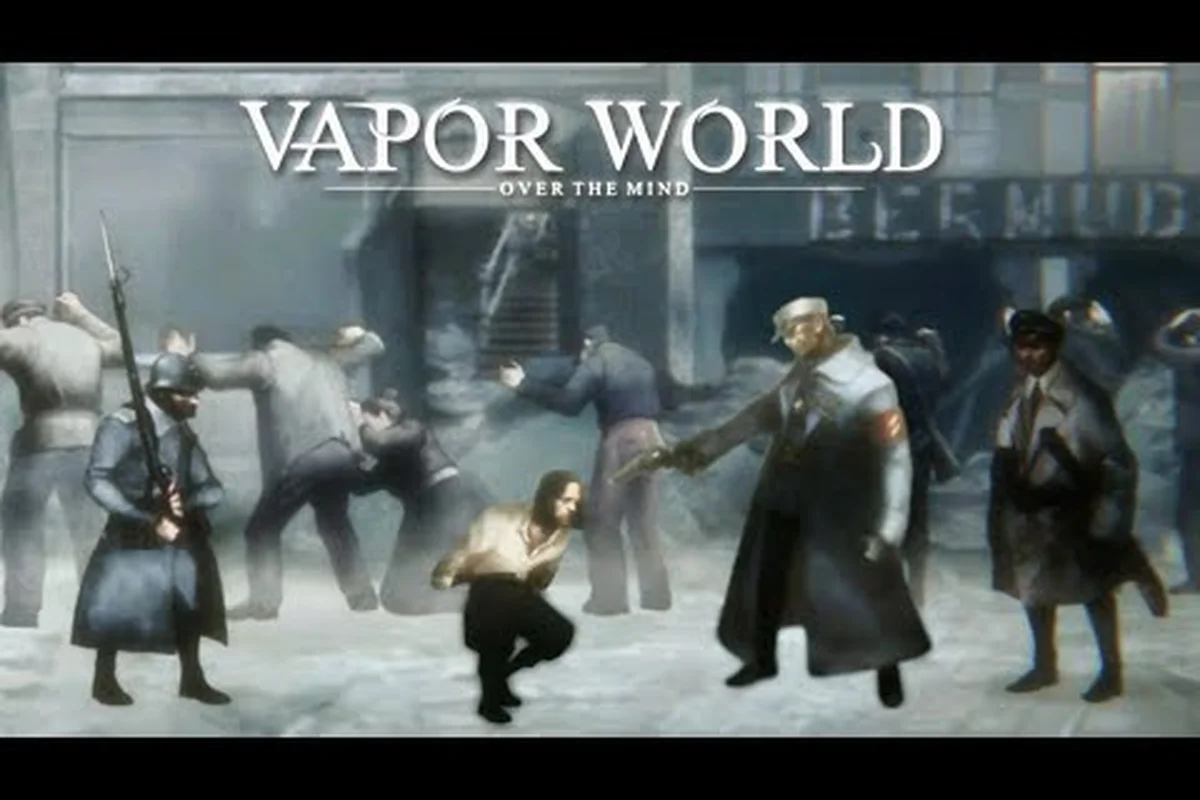
The vapor world over the mind dream explained lore is the emotional core of this narrative-driven 2D souls-like, where a boy named Paslow is pulled into a twisted dream with no escape. This matters because understanding the dream's structure directly shapes how you interpret every boss fight, every memory fragment, and the game's haunting conclusion. Discover how the endless nightmare holds fragments of a shattered mind in a world born of anguish and regret, and why the truth buried below changes everything you thought you knew about the story.
The Dream Sea Explained
The vapor world over the mind what is the vapor world question has puzzled players since the announcement trailer first dropped. According to the official Vapor World website, the vapor world is a dreamscape constructed from the fractured psyche of its creator, a place where Projections — dream entities born from suppressed emotions — roam freely and guard the fragments of a broken consciousness.
The vapor world isn't a single continuous realm but rather a layered construct, each stratum representing a different emotional state or memory. Players navigate through hand-painted dream layers that shift seamlessly between pastoral beauty and suffocating dread, which mirrors how real dreams can pivot from serene to terrifying in an instant. The game's official gameplay trailer demonstrates this visual storytelling approach, showing how the environment itself communicates narrative information without a single line of exposition.
What makes the vapor world unique among souls-like settings is its deflection-based combat tied directly to the dream logic. When you deflect an enemy's strike perfectly, you trigger a Crack Break, leaving Projections defenseless so you can extract their Embers using the power of the Id. This isn't just a combat mechanic — it's a narrative device that represents reclaiming lost pieces of the dreamer's mind.
The Dream Layers and Their Meaning
The vapor world lore explained through its layers reveals a deliberate design philosophy. Each area you explore corresponds to a different aspect of the dreamer's trauma:
-
The Surface Dream — represents the conscious mind's attempt to process daily life, filled with distorted but recognizable locations
-
The Mid-Dream — where suppressed memories begin surfacing, often as hostile Projections that attack on sight
-
The Nightmare Core — the deepest layer where the truth buried below resides, guarded by the most powerful entities
The seamless world design means you can traverse between these layers without loading screens, which reinforces the idea that the dream is a single continuous consciousness rather than separate levels. This design choice, detailed in our map guide covering the seamless world structure, makes the psychological horror more immersive because you never feel safe in any zone.
The Nightmare Lore and Its Origins
The vapor world over the mind nightmare lore centers on the concept that nightmares aren't random terrors but purposeful constructions. Community analysis of the game's collectible memory fragments suggests the nightmare exists to protect the dreamer from a truth too painful to face directly. The Projections you fight aren't mindless monsters — they're guardians of specific memories, each one designed to prevent you from reaching a particular revelation.
This interpretation aligns with the game's core mechanic of extracting Embers from defeated Projections. Every Ember you collect restores a piece of the dreamer's shattered mind, but the game never tells you whether this restoration is helpful or harmful. The ambiguity is intentional, as the story explained guide points out, because the narrative rewards players who question every victory.
The nightmare's architecture follows a pattern that psychological research would recognize. The dreamer's mind creates increasingly hostile defenses as you approach the central truth, which mirrors how real trauma responses escalate when someone gets close to repressed memories. The game's difficulty curve isn't just gameplay progression — it's a representation of the mind's resistance to healing.
Key Nightmare Entities and Their Symbolism
| Entity Type | Appearance | Symbolic Meaning | Combat Role |
|---|---|---|---|
| Wandering Projections | Humanoid shapes with distorted faces | Suppressed daily anxieties | Basic enemies teaching deflection timing |
| Memory Wardens | Armored figures with glowing cores | Gatekeepers of specific traumas | Mini-bosses requiring pattern recognition |
| The Sleeping Ones | Massive dormant creatures | Deepest repressed memories | Optional encounters with high rewards |
| Nightmare Manifestations | Formless horrors that shift shape | The dreamer's fear of the unknown | Boss-tier enemies with multiple phases |
The Sleeping Ones deserve special attention because they represent the most deeply buried truths. Our dedicated Sleeping Ones explained guide breaks down their lore significance, but the key insight is that waking them isn't always the right choice. Some players report that leaving certain Sleeping Ones undisturbed leads to a different ending, suggesting the game tracks your curiosity against your compassion.
The Truth Buried Below the Dream
The vapor world over the mind truth buried below is the revelation that transforms the entire narrative. Based on community data collected from players who've completed multiple playthroughs, the buried truth involves the identity of the dreamer itself. Without spoiling the full reveal, the game plants subtle clues throughout the world that the boy Paslow isn't merely a visitor to the vapor world — he's an integral part of its creation.
The deflection combat system takes on new meaning once you understand this truth. Every successful deflect represents rejecting a painful memory, while every failed deflect means accepting it. The game's signature Crack Break mechanic, where you shatter an enemy's defensive stance, symbolizes breaking through the mind's resistance to confronting difficult truths. This mechanical-narrative fusion is why the vapor world over the mind lore explained through gameplay feels so cohesive.
The truth buried below also recontextualizes the game's stealth sections. When you sneak past Projections rather than fighting them, you're choosing not to engage with certain memories. The game never penalizes this choice explicitly, but observant players notice that stealth-heavy playthroughs unlock different memory fragments than combat-focused ones, suggesting the dream responds to how you process its content.
Evidence Supporting the Buried Truth Theory
The vapor world over the mind story theory community has compiled substantial evidence for the buried truth interpretation:
-
Memory fragment placement — Fragments are always located near environmental storytelling elements that hint at the dreamer's real-world identity
-
Projection behavior patterns — Certain Projections flee rather than fight when you approach specific locations, suggesting they're protecting something personal
-
Boss dialogue fragments — Several bosses speak lines that reference events outside the dream, implying they have awareness of the waking world
-
Ending variations — The game's multiple endings depend on how many memory fragments you collect and which Projections you choose to fight or spare
The boss ranking community has noted that the most challenging encounters are also the most narratively significant. Our boss cheese tactics guide includes notes on which bosses drop lore-critical items, and the pattern is striking — the harder the fight, the more essential the lore reward.
How the Dream World Connects to Gameplay Mechanics
The vapor world over the mind dream explained through its mechanics reveals a design philosophy where every system reinforces the narrative. The Ember extraction system isn't just a resource mechanic — it's the game's way of showing you reclaiming pieces of consciousness. Each Ember you extract from a defeated Projection restores a small portion of the dreamer's mind, and the game tracks this restoration through subtle visual changes in the environment.
The Id power system deserves particular attention because it represents the dreamer's raw, unfiltered desires. When you activate Id powers during combat, the screen distorts and enemy movements become more erratic, which mirrors how unchecked desires can destabilize a person's psyche. The game's official YouTube channel showcases these mechanics in action, and the visual language is unmistakably psychological.
What makes this mechanical-narrative integration so effective is that it never feels forced. The game doesn't stop to explain that you're symbolically healing a mind — it simply presents the mechanics and lets players draw their own conclusions. This approach respects player intelligence and rewards careful observation, which is why the vapor world over the mind lore explained through gameplay resonates so strongly with the community.
Combat as Psychological Processing
| Gameplay Mechanic | Narrative Equivalent | Player Experience |
|---|---|---|
| Deflection timing | Processing painful memories | Learning to face trauma without flinching |
| Crack Break follow-up | Breaking through mental defenses | The satisfaction of confronting hard truths |
| Ember extraction | Reclaiming lost consciousness | Building a more complete understanding |
| Stealth avoidance | Choosing not to engage | The tension of leaving questions unanswered |
| Id power activation | Embracing raw emotion | The risk and reward of letting go |
The chapter progression mirrors the stages of psychological healing, from denial to acceptance. Our chapter guide covering the dream and nightmare walkthrough notes that the game's pacing deliberately alternates between combat-heavy and exploration-heavy sections, which mirrors how real healing isn't a linear process — it involves periods of intense confrontation followed by quiet reflection.
Story Theories and Player Interpretations
The vapor world over the mind story theory community has produced several compelling interpretations of the game's narrative. While the developers at ALIVE Inc. have remained deliberately vague about confirming any single reading, the official Twitter account frequently engages with fan theories, suggesting the ambiguity is intentional.
The most popular theory posits that the vapor world is a shared dream space, not just a single person's nightmare. This interpretation gains traction from the game's multiplayer-adjacent mechanics, where player ghosts occasionally appear in the world, hinting at other dreamers traversing the same space. The theory suggests that the Projections you fight might be fragments of other dreamers' minds, which would explain why some of them seem to recognize you.
Another compelling theory focuses on the game's title itself. The phrase "Over The Mind" could be read as a statement of control — something has taken over the mind — or as a journey, moving over the landscape of the mind. The game's structure supports both readings, and players who complete multiple playthroughs often find themselves shifting between interpretations.
Comparing the Major Theories
| Theory | Core Claim | Supporting Evidence | Weaknesses |
|---|---|---|---|
| Single Dreamer Theory | The vapor world belongs to one person | Consistent visual style, unified architecture | Doesn't explain player ghost appearances |
| Shared Dream Theory | Multiple minds occupy the same space | Ghost mechanics, varied Projection behaviors | Less supported by memory fragment lore |
| Paslow's Mind Theory | The boy is the dreamer | His central role, memory fragment placement | Requires ignoring some environmental clues |
| Artificial Dream Theory | The dream is constructed, not natural | Symmetrical layouts, mechanical precision | Contradicts the organic feel of the world |
The vapor world lore community has also noted that the game's hand-painted art style serves a narrative purpose beyond aesthetics. The slightly imperfect, organic quality of the environments suggests a mind's construction rather than a designed world, which supports the interpretation that everything you see is a psychological projection rather than an external reality.
Frequently Asked Questions
What is the vapor world in Over The Mind?
The vapor world is a dreamscape constructed from a shattered psyche, where Projections guard memory fragments and Embers represent reclaimed consciousness. According to the official website, it's a world born of anguish and regret, designed as a narrative-driven souls-like experience where combat mechanics symbolize psychological processing.
How does the dream explained lore affect gameplay?
The dream lore directly influences combat through the deflection system, where perfect deflections trigger Crack Breaks that leave enemies vulnerable. This mechanic symbolizes breaking through mental defenses, while Ember extraction represents reclaiming lost memories. The game's seamless world design reinforces that you're exploring a single continuous consciousness rather than separate levels.
What is the truth buried below the vapor world?
The truth buried below involves the identity of the dreamer and Paslow's connection to the world's creation. Community analysis of memory fragments and boss dialogue suggests the boy isn't just a visitor but an integral part of the dream's architecture. The game plants subtle clues throughout that recontextualize the entire narrative upon discovery.
Are the Projections in the nightmare lore friendly or hostile?
Projections are primarily hostile, but their behavior varies based on your actions. Some flee when you approach specific locations, while others only attack after you've collected certain memory fragments. This suggests they're guardians of specific truths rather than mindless enemies, and your choices determine which memories you confront and which you leave undisturbed.
Does the game have multiple endings based on dream exploration?
Yes, the game features multiple endings tied directly to your dream exploration. Collecting all memory fragments, sparing Projections instead of extracting their Embers, and waking every Sleeping One unlocks the true ending. Thorough exploration reveals buried truths, while a compassionate approach respects the dream's inhabitants and alters Paslow's final fate.