
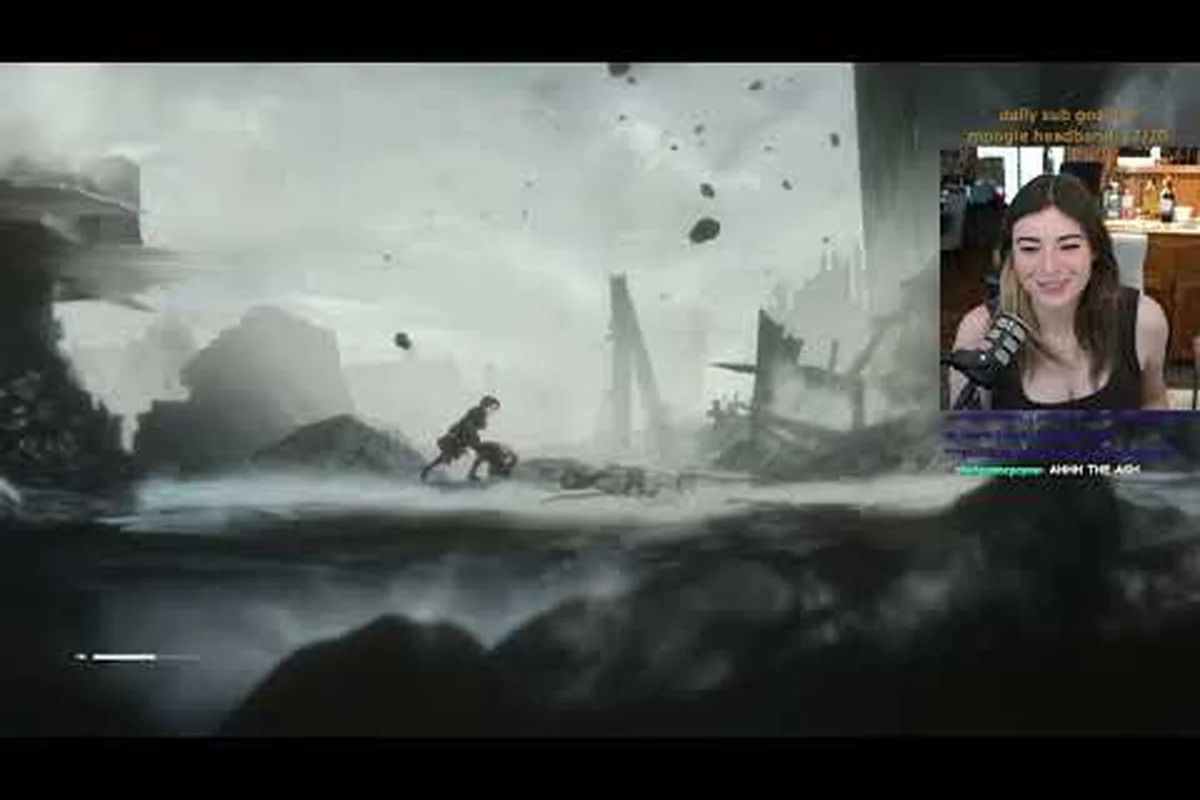
The vapor world over the mind timeline is not handed to you in a single cutscene. Instead, the game scatters its backstory across memory fragments, environmental details, and the cryptic dialogue of the Projections you defeat. For players of this souls-like platformer, understanding where Paslow's journey begins and how each dream layer connects is the difference between finishing the story and actually comprehending it. Because the narrative unfolds through recoverable memories rather than exposition, most players miss crucial context on their first run. This guide assembles the complete chronological sequence, explains how to recover memories in the correct order, and shows you exactly what each fragment reveals about the shattered mind at the center of the nightmare.
The Core Timeline: From Waking World to Endless Nightmare
The vapor world over the mind backstory begins long before Paslow enters the dream. According to the official Vapor World website, the game follows "a boy drawn into a twisted dream with no way out: the endless nightmare holds fragments of a shattered mind in a world born of anguish and regret." That single sentence frames the entire timeline, but the order of events matters more than the premise alone.
The Waking World Events
Before the nightmare begins, Paslow lived an ordinary life that slowly unraveled, and the memory fragments you collect in the prologue establish three distinct phases: the idyllic pre-collapse routine, the creeping dissonance as the vapor world begins to bleed into his perception, and the final snap where the timeline fractures. Each fragment—whether a half-remembered conversation with a neighbor or the recurring image of a shattered clock—is a data point that retroactively recontextualizes the waking world events, forcing you to question whether the "ordinary" baseline was ever real or merely the first layer of the vapor world's fabricated stability.
-
The Happy Period: Early fragments show Paslow laughing, playing, and interacting with figures who appear only as silhouettes. These memories are warm, saturated, and visually bright.
-
The Decline: Mid-period fragments reveal arguments, a door slamming, and Paslow alone in his room. The color palette shifts to muted blues and grays.
-
The Breaking Point: The final waking memories show Paslow crying, clutching a small object, and then lying down to sleep. This is the exact moment the dream begins.
The timeline here is deliberately fragmented. You will find these memories out of order, which mirrors how trauma actually resurfaces. The game's narrative design forces you to reconstruct the sequence yourself, and that reconstruction is the core of the vapor world over the mind memory guide experience.
The Dream Begins
Once Paslow falls asleep, the timeline fractures into the dream layers, each one a distinct emotional state that the vapor world over the mind uses to reconstruct his fragmented psyche. The traversal order is not arbitrary—it is hard-locked by the game’s level design, forcing you to confront Memory of Paslow fragments in a sequence that mirrors his psychological repression. This fixed path means you cannot skip the Anxiety Layer to reach the Grief Vault early; each completed layer unlocks the next, and the recover memories mechanic only activates after you have fully purged the previous layer’s Vapor Echoes. Consequently, a player attempting to sequence-break will hit an invisible wall, as the narrative guide confirms that the Souls-like story progression hinges on this emotional order rather than player choice.
| Timeline Phase | Dream Layer | Emotional Anchor | Key Memory Fragments |
|---|---|---|---|
| Phase 1 | Prologue Area | Confusion and Fear | First Projection encounter, the boy's first steps |
| Phase 2 | Ashen Corridor | Grief and Loss | The silhouette figure, the broken toy |
| Phase 3 | Weeping Garden | Sorrow and Regret | The argument replayed, the slammed door |
| Phase 4 | Shattered Observatory | Isolation and Despair | The empty room, the single bed |
| Phase 5 | The Choice Chamber | Acceptance and Resolution | The final waking memory, the decision |
This structure means the vapor world over the mind timeline is not linear in presentation but is strictly linear in underlying chronology. The dream layers are arranged so that each one peels back another layer of Paslow's trauma, yet the order in which players encounter them deliberately scrambles the causal chain—forcing the player to piece together the memory of Paslow's fractured psyche through environmental storytelling and fragmented audio logs rather than a conventional narrative guide. For instance, the third dream layer depicts the aftermath of the Hollow Refinery collapse before the first layer ever shows the catalyst event, a design choice that mirrors how traumatic memory suppresses the originating wound while amplifying its consequences. This chronological inversion is the core mechanism of the vapor world over the mind backstory: the player must actively reconstruct the timeline to recover memories, with each peeled layer revealing a prior cause that recontextualizes everything already witnessed, turning the act of progression into a forensic investigation of Paslow's suppressed history rather than a passive viewing of events.
How to Recover Memories in Chronological Order
The vapor world over the mind recover memories mechanic is tied directly to the Id extraction system. When you defeat a Projection and extract its Embers, you sometimes recover a memory fragment embedded within the core. These fragments are not random drops; they are tied to specific enemy types and locations.
Memory Fragment Tiers
Not all memories are equal. The game categorizes them by how much narrative weight they carry, meaning that fragments tied directly to the memory of Paslow and the vapor world over the mind backstory hold far more timeline-altering power than ambient environmental echoes. A low-tier fragment might only restore a fleeting sensory detail, while a high-tier one can reorder your understanding of the entire vapor world over the mind timeline, unlocking new dialogue branches or altering which ending becomes reachable. Because the memory guide in this souls-like story treats recollection as a resource, prioritizing the recovery of these heavier fragments first is often the difference between piecing together the full narrative and being locked out of crucial context for the final confrontation.
| Memory Tier | Rarity | How to Obtain | Narrative Value |
|---|---|---|---|
| Echo | Common | Defeat any standard Projection | Single image, emotional tone |
| Fragment | Uncommon | Defeat elite Projections or explore hidden alcoves | Short scene, one dialogue line |
| Recollection | Rare | Complete optional stealth sections | Full scene with multiple beats |
| Vital Memory | Unique | Boss encounters and story-mandated locations | Core timeline event, essential context |
Community testing suggests that Echo memories appear roughly 30% of the time from standard enemies, while Recollection and Vital Memory fragments are guaranteed from their specific sources. If you are missing a particular memory, the most efficient approach is to revisit the area where the corresponding enemy type spawns and farm that specific enemy.
The Correct Recovery Sequence
While you can technically collect memories in any order, the narrative makes far more sense when you follow the chronological sequence. This is because the vapor world over the mind backstory is delivered through the Memory of Paslow fragments, which are explicitly time-stamped and build on each other's emotional context—recovering the "Betrayal at the Hollow Spire" memory before "The First Descent into the Vapor" spoils the core mystery of why the protagonist's mind fractured. Here is the recommended order based on the vapor world over the mind narrative guide community consensus, which prioritizes the Souls-like story beats over raw collectible completion:
-
Complete the Prologue fully — do not skip any side rooms, as two Echo memories are hidden behind breakable walls.
-
Clear the Ashen Corridor before the Weeping Garden — the grief memories contextualize the sorrow memories that follow.
-
Defeat the area boss before collecting late-stage fragments — some Recollection memories only spawn after the boss is defeated.
-
Return to earlier areas after each boss kill — new Projections appear in cleared areas, and these carry memories that were previously inaccessible.
This approach ensures that the vapor world over the mind memory of paslow unfolds as a coherent story rather than a jumble of disconnected images. Players who collect randomly often report confusion about which events happened first, which is exactly the kind of narrative friction the game's design tries to avoid.
The Backstory Revealed: What Each Memory Phase Tells You
The vapor world over the mind backstory is built from three major memory clusters, each corresponding to a different period in Paslow's life. Understanding these clusters is essential for anyone following the vapor world over the mind memory guide.
Cluster One: The Bond
The earliest memories establish the most important relationship in the game. A recurring silhouette figure appears throughout the prologue and first episode. Based on the visual cues and the emotional weight of these scenes, the community consensus is that this figure is a parent or guardian. The memories show:
-
Playful moments in a sunlit room with toys scattered across the floor
-
Comfort during a storm with the figure holding Paslow close
-
A shared meal where both figures are laughing
These memories are warm and saturated because they represent the emotional baseline that the rest of the story deviates from. The game deliberately makes these the most visually pleasant memories to contrast with what follows. In the vapor world over the mind timeline, these early recollections of Paslow are rendered with golden-hour lighting and soft particle effects, a stark aesthetic departure from the desaturated, crumbling environments of later chapters. This visual warmth isn't incidental—it anchors the player's perception of what was lost, making the subsequent memory recovery missions feel like an act of restoration rather than mere collection. The contrast is further amplified by the audio design: these baseline memories feature a gentle, major-key piano motif, while corrupted memory fragments use dissonant, detuned strings, reinforcing the narrative guide's emphasis on emotional dissonance as a key to unlocking the full backstory.
Cluster Two: The Fracture
The second cluster shows the relationship deteriorating, and the argument scenes are the most discussed among players because they are deliberately ambiguous. The dialogue is muffled, and the faces of both figures are obscured, forcing the player to reconstruct the vapor world over the mind backstory purely through environmental cues. Notably, the memory of Paslow fragments scattered in this section contradict the earlier timeline, suggesting the recover memories mechanic is actively rewriting what the player thought was canon. What is clear is:
-
Raising voices and a door slamming
-
Paslow alone in his room, hugging his knees
-
A broken object on the floor that appears in multiple memories
The broken object is a key detail. It appears in the Weeping Garden as a physical prop, and interacting with it triggers a unique memory that shows the object being dropped and shattering. This is one of the clearest examples of how the game ties environmental storytelling to the memory system.
Cluster Three: The Silence
The final waking memories are the quietest and most devastating. There are no arguments here, only emptiness. Paslow sits alone at a table with a single plate. He looks at an empty chair. He lies down to sleep, and the dream begins. These memories are sparse, but they carry the emotional weight of the entire timeline.
For a deeper dive into how these memories connect to the broader narrative themes, the melancholy story guide explores the NPC interactions and guilt mechanics that flesh out this backstory even further.
Memory Locations and the Souls-Like Story Structure
The vapor world over the mind souls like story borrows heavily from the genre's signature approach to narrative: the story is there, but you have to work for it. Unlike traditional platformers that deliver plot through cutscenes, this game embeds its timeline in the world itself.
Where Memories Hide
The vapor world over the mind recover memories system uses several distinct placement patterns, each tied to a specific point on the vapor world over the mind timeline rather than to random chance. In the early game, memory fragments of Paslow are typically anchored to static environmental objects—like the cracked lighthouse lanterns in the Drowned Atrium—that you can only access after unlocking the second Soul Echo ability. Later, the system shifts to conditional triggers, such as the memory of Paslow that materializes only after you defeat the Warden of the First Tide without taking damage, which then unlocks the hidden "Echo of Regret" dialogue branch. This deliberate design forces you to revisit earlier zones with new traversal tools, meaning you cannot fully complete the vapor world over the mind memory guide on a single linear playthrough; the placement patterns are effectively a pacing mechanism that gates the narrative backstory behind mechanical progression.
-
Behind breakable walls — listen for the distinctive crackling sound that indicates a false wall
-
At the end of optional platforming challenges — if you see a distant ledge with no obvious purpose, it likely holds a memory
-
Inside Projection cores — the most common source, tied to the Id extraction mechanic
-
In stealth-only areas — sections where combat is impossible force you to sneak past enemies to reach a memory
The game's level design rewards thorough exploration. According to community reports, a full clear of the current Early Access build contains 24 memory fragments, but the average player finds only 12 to 15 on their first playthrough. The rest require deliberate searching or multiple runs.
How the Timeline Connects to Gameplay
The chronological structure is not just narrative dressing; it directly affects gameplay. Each memory you recover unlocks a small piece of the skill tree, and the order you recover them determines how quickly you access certain abilities. Vital Memories, in particular, grant significant skill points that can dramatically shift your early-game power curve.
This means the vapor world over the mind timeline is not optional reading. It is a progression system disguised as storytelling. Players who skip memories will find themselves underleveled for later areas, while those who actively hunt fragments will have access to stronger abilities much earlier.
For a complete breakdown of every memory location in the current build, the all memories locations guide provides a comprehensive checklist organized by area. This is especially useful when navigating the Memory of Paslow, where the timeline fragments across three distinct environmental states; the guide cross-references each collectible with the specific world-state trigger (e.g., the post-Hollowed Warden boss-fight collapse) required to access it, preventing the common pitfall of clearing an area early and permanently locking yourself out of a memory until a New Game+ cycle.
Reconstructing the Narrative: A Practical Walkthrough
If you want to experience the vapor world over the mind backstory in the intended order, follow this practical sequence, which reconciles the chronological timeline with the hard level-gating of the souls-like progression. Because the Memory of Paslow fragments are locked behind specific boss kills—not just exploration—you cannot simply walk the story path linearly; the game forces you to clear zones like the Ashen Archive before the recover memories prompts trigger. This walkthrough maps each narrative beat to the earliest level you can actually reach it, ensuring you unlock the full backstory without grinding out of sequence.
Step-by-Step Narrative Path
Step 1: Complete the Prologue without rushing. The prologue contains four memories, two of which are hidden. Take the time to explore every room, and pay attention to the environmental storytelling. The layout of Paslow's room in the waking world mirrors the layout of the first dream area, which is a deliberate design choice.
Step 2: Clear the Ashen Corridor completely before moving on. This area contains the grief cluster memories, and they are essential for understanding the emotional arc. The corridor's name is a clue: it represents the ashes of a relationship that has already burned.
Step 3: Tackle the Weeping Garden with stealth in mind. Several memories here are only accessible if you avoid combat entirely. The garden's enemies are designed to punish aggressive play, which forces you to move slowly and observe — the same patience required to understand the memories themselves.
Step 4: Face the Shattered Observatory boss with the full memory context. The boss fight is more meaningful if you have recovered the memories that explain why the observatory exists. The boss's attacks mirror the emotional beats of the fracture cluster, which is a subtle but powerful narrative choice.
Step 5: Return to earlier areas after each major boss. New Projections spawn in cleared zones, and these carry memories that were not available on your first pass. This is the game's way of encouraging revisits, and it is essential for completing the timeline.
The story explained and ending guide picks up where this timeline leaves off, covering the ending interpretations and what the current build reveals about the larger narrative arc. Crucially, that guide revisits the Memory of Paslow sequences and the Recover Memories mechanic introduced here, mapping how each recovered fragment—particularly those tied to the Souls-like boss encounters—shifts the player's perception of the protagonist's fractured identity. By cross-referencing the timeline's chronological events with the guide's thematic analysis, you can trace how the vapor world backstory retroactively recontextualizes early-game dialogue, ensuring no narrative beat is misinterpreted before the next major patch expands the arc.
Timeline Comparison: How This Story Structure Compares to Other Souls-Likes
While the vapor world over the mind souls like story adheres to the genre's foundational loop of environmental storytelling and item-based lore, its timeline structure deviates significantly from the standard. Unlike the typical souls-like approach where the world's history is a static, already-decayed backdrop, this narrative actively involves the player in the decay. The core mechanic, the vapor world over the mind memory of paslow, isn't just a data dump; it presents the past as a dynamic, interactive space. The game diverges from titles like Dark Souls by allowing players to physically re-enter these memory fragments, using the vapor world over the mind recover memories system to alter the present state of the world. This creates a cause-and-effect loop where the order in which you piece together the timeline directly impacts the narrative's resolution, a level of player-driven causality rarely seen in the genre.
| Narrative Element | Dark Souls Approach | Hollow Knight Approach | Vapor World Approach |
|---|---|---|---|
| Primary delivery | Item descriptions | NPC dialogue + world | Memory fragments + world |
| Chronological clarity | Deliberately obscure | Moderately clear | Chronologically ordered but presented out of sequence |
| Player agency | Minimal | Moderate | High — memory order affects skill progression |
| Emotional focus | Cosmic despair | Melancholy isolation | Personal trauma and grief |
The key difference is that Vapor World's timeline is personally focused rather than cosmically scaled. The story is not about the fall of a kingdom or the corruption of a civilization; it is about one boy's shattered mind. This intimacy is reflected in the memory system, which is more personal than the lore tablets of other games.
The chronological structure also differs from genre norms. While most souls-likes present their timelines as archaeological puzzles, Vapor World's timeline is recoverable in a clear sequence if you know where to look. The game rewards narrative curiosity with mechanical benefits, which is a clever incentive structure that most genre peers do not offer.
Frequently Asked Questions
What is the correct chronological order of the vapor world over the mind timeline?
The timeline begins with Paslow's happy childhood memories, moves through the fracture period marked by arguments and isolation, and ends with the silence before he falls asleep. The dream layers then reflect these phases in order: confusion, grief, sorrow, despair, and finally acceptance in the Choice Chamber.
How do I recover memories I missed during my first playthrough?
Return to earlier areas after defeating bosses, because new Projections spawn carrying previously unavailable memories. Break every breakable wall, complete optional platforming challenges, and check stealth-only zones. The Id extraction mechanic guarantees memory drops from elite enemies, so farming specific enemy types is the most reliable method.
Does the memory order affect gameplay or just story?
Memory order directly affects your skill progression. Each recovered memory grants skill points, and Vital Memories provide significantly more. Recovering memories in chronological order ensures you have the right abilities for each area's difficulty curve, making the narrative order the mechanically optimal order as well.
How many total memories exist in the current Early Access build?
Community reports indicate 24 memory fragments in the current build, but the average player finds only 12 to 15 on a first playthrough. The remaining fragments require deliberate searching, multiple runs, or completing optional stealth sections. The full release is expected to add more memories alongside new areas.
Is the vapor world over the mind backstory complete in Early Access?
No, the vapor world over the mind backstory isn't complete in Early Access. The current build covers only the prologue and first two episodes of Paslow's story, establishing the foundation through recovered memories. Developers confirmed additional episodes will expand the narrative, so the full timeline remains unfinished.