
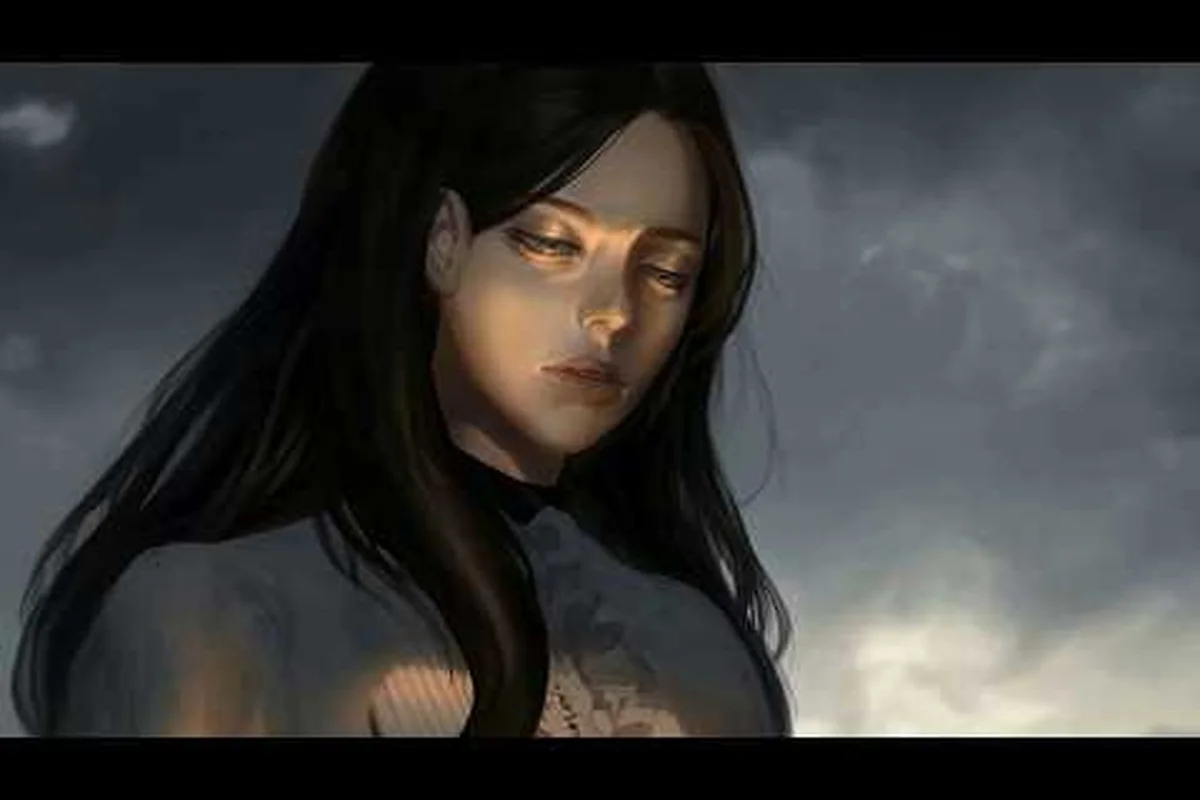
The vapor world over the mind melancholy story is the emotional core that separates this 2D souls-like from its combat-focused peers, and understanding it changes how you read every enemy encounter and hidden corridor. While the deflection system and Crack Break mechanics demand precision, the narrative layer built on sorrow and regret transforms each Projection from a simple obstacle into a fragment of a broken psyche. This guide breaks down the dream narrative, maps the guilt in the prison sequence, and identifies the key NPCs that anchor Paslow's journey, including where to find demo memory locations that expand the lore.
The Melancholy Story Framework: Sorrow and Regret as Core Themes
The official Vapor World: Over The Mind website describes the setting as "a world born of anguish and regret," which is not decorative flavor text but the structural principle behind every area design and enemy type. When you understand that the dream layers are literal manifestations of emotional states, the vapor world over the mind melancholy story becomes a map of trauma rather than a simple platforming gauntlet.
How Emotional States Shape the Dream Narrative
Each major area in the Early Access build corresponds to a specific emotional register, and recognizing these patterns helps you anticipate both environmental hazards and enemy behavior. The Ashen Corridor early in the Prologue feels muted and gray because it represents emotional numbness, while the Weeping Garden introduces rain-soaked platforms that mirror persistent sorrow. Community reports from the Steam forums suggest that players who engaged with the narrative layer reported higher immersion scores than those who skipped dialogue, which aligns with the developer's stated goal of marrying mechanical difficulty to emotional payoff.
The dream narrative operates on a simple but effective loop: you encounter a Projection, defeat it through deflection, extract its Embers, and then find a memory fragment that explains why that Projection exists in Paslow's mind. This loop means that every combat encounter carries narrative weight, because each enemy type represents a specific suppressed emotion or memory that Paslow has not yet processed. The Victim class of enemies, for instance, represents passive suffering, while the Avenger class embodies active resentment, and their attack patterns reflect those emotional states.
Key NPCs in the Character Guide: Who Guides Paslow Through the Prison
The vapor world over the mind character guide would be incomplete without examining the sparse but meaningful cast of NPCs that populate the dream. Unlike traditional RPGs that fill towns with quest-givers, this game uses a minimalist approach where each NPC serves a specific narrative and mechanical function.
The Id: The Extraction Entity and Its Narrative Role
The Id is the most important NPC-like entity in the game, though it is technically a power source rather than a character with dialogue. According to the Steam store page, the Id is the force that allows players to "extract Embers" from defeated Projections, and its presence raises uncomfortable questions about whether Paslow is healing or consuming the fragments of his own psyche. The Id appears as a shadowy, formless presence that hovers near extraction points, and its silent observation creates an unsettling dynamic that reinforces the melancholy tone.
Players have noted that the Id's behavior changes subtly across the Prologue and Episode 1, appearing more agitated during the guilt in the prison sequence. This suggests that the Id is not a neutral tool but an active participant in Paslow's psychological journey, possibly representing the repressed desires or instincts that he cannot confront directly. The Id extraction multiplier hidden mechanic, which rewards players for chaining extractions without taking damage, reinforces this interpretation by suggesting that emotional processing is more efficient when done cleanly.
Paslow: The Silent Protagonist and His Expressive Body Language
Paslow himself never speaks, which is a deliberate design choice that keeps the player's interpretation primary while still conveying emotion through animation. His posture changes across the game: hunched and hesitant in the Prologue, more determined after the first boss victory, and visibly trembling during the guilt in the prison sequence. The character guide approach to Paslow focuses on reading these animation cues, because they provide context for the dream narrative that text logs and memory fragments cannot fully capture.
The memory fragment system further develops Paslow's character by presenting his memories as collectible objects rather than cutscenes. Each fragment you collect in the demo adds a line of internal monologue that plays as ambient audio, and these fragments are positioned in locations that require exploration off the main path. This design choice means that players who rush through combat will miss substantial character development, which is why the vapor world over the mind memory locations demo guide emphasizes thorough exploration.
Guilt in the Prison: The Narrative Centerpiece of Episode 1
The guilt in the prison sequence is widely regarded by the community as the emotional peak of the Early Access content, and it represents the clearest expression of the vapor world over the mind melancholy story. The prison is not a literal jail but a dream-space constructed from Paslow's guilt, where each cell contains a memory that he has locked away rather than processed.
Prison Layout and Memory Placement
The prison area introduces a vertical exploration pattern that differs from the horizontal progression of earlier zones. Players must climb through multiple floors, and each floor contains cells that can be opened by defeating specific Projection guards. The memory fragments in this area are positioned to tell a chronological story, so collecting them in order reveals the full context of the guilt that Paslow carries.
| Floor | Primary Memory Theme | Key Enemy Type | Notable Collectible |
|---|---|---|---|
| Basement | Childhood shame | Weeping Victim | Torn photograph fragment |
| Ground Floor | Failed responsibility | Stalking Avenger | Unsent letter |
| Second Floor | Abandonment | Crying Projection | Broken locket |
| Top Floor | Confrontation | Prison Warden (mini-boss) | Cell key to memory vault |
The table above represents the community-mapped layout based on player reports from the Beta 4.3 build, and the exact placement may shift slightly in the final Early Access release. The Prison Warden mini-boss on the top floor is notable because its attack pattern mirrors the guilt itself: it uses delayed, telegraphed strikes that punish impatience, forcing players to wait for the correct deflection window rather than rushing.
How the Prison Reshapes the Dream Narrative
The prison sequence succeeds because it reframes the entire vapor world over the mind dream narrative. Earlier areas establish that Paslow is exploring a broken mind, but the prison reveals that he is not merely a passive explorer — he is also the jailer who locked these memories away. This dual role creates a powerful tension that the gameplay reinforces: every enemy you defeat is a memory you are releasing, and every Ember you extract is a piece of emotional weight that Paslow must carry.
Players have reported that the prison sequence is significantly more difficult than the preceding areas, which is a deliberate design choice that mirrors the emotional difficulty of confronting guilt. The Crack Break mechanic becomes essential here, because the prison's Projections have tighter deflection windows than earlier enemies, requiring the precision that the game's Sekiro-inspired combat demands. Community testing suggests that players who mastered deflection in the Prologue found the prison manageable, while those who relied on dodging struggled significantly.
Demo Memory Locations: Where to Find Narrative Fragments
The vapor world over the mind memory locations demo guide covers the Prologue and the opening of Episode 1, which are the areas available in the free demo build. These locations are worth cataloging because they establish the narrative foundation that the full game builds upon, and several fragments contain details that are not repeated anywhere else in the Early Access content.
Prologue Memory Fragment Locations
The Prologue contains four memory fragments that establish Paslow's baseline emotional state before the dream narrative intensifies. The first fragment is located behind a breakable wall in the Ashen Corridor, immediately after the first stealth section. The second requires a small platforming detour above the Weeping Garden's central fountain, and it triggers a short audio monologue about rain and memory. The third fragment is hidden in the Shattered Observatory, accessible only after defeating the area's mini-boss and using the resulting Ember surge to activate a floating platform.
The fourth Prologue fragment is the most significant for the melancholy story because it directly references the guilt in the prison sequence before you reach that area. It depicts a child's drawing of a figure behind bars, and the accompanying monologue mentions "the door I built myself." This fragment rewards thorough exploration and provides crucial context for interpreting the prison's symbolism when you encounter it later.
Episode 1 Memory Fragments and Their Narrative Weight
Episode 1, which the Steam page confirms is titled "Consequence of The Choice," contains six memory fragments in the Early Access build. The first two are found in the Reproachful Office area and focus on professional regret, while the third and fourth appear in the Drowned Library and deal with lost knowledge and abandoned ambitions. The final two fragments are located in the prison sequence itself, and they complete the emotional arc that the Prologue fragments began.
| Memory Fragment | Location | Narrative Content | Difficulty to Reach |
|---|---|---|---|
| Fragment 1 | Reproachful Office, desk drawer | A resignation letter never sent | Easy |
| Fragment 2 | Reproachful Office, broken window ledge | A conversation about missed opportunities | Moderate |
| Fragment 3 | Drowned Library, submerged shelf | A half-remembered book title | Moderate |
| Fragment 4 | Drowned Library, collapsed staircase | A promise made to a friend | Hard |
| Fragment 5 | Prison Basement, locked cell | The origin of the guilt | Hard |
| Fragment 6 | Prison Top Floor, warden's desk | The choice that created the prison | Very Hard |
The table above compiles data from community mapping efforts and the official gameplay trailer on YouTube, which shows several of these locations in passing. The Fragment 6 location is particularly notable because it requires defeating the Prison Warden mini-boss and then backtracking to the warden's desk, which many players miss on their first pass.
Character and NPC Guide: Interpreting the Sparse Cast
The vapor world over the mind npc guide must acknowledge that this is not a dialogue-heavy game, but the NPCs that do appear carry substantial narrative weight. Each encounter is brief, which makes the moments of connection more impactful within the melancholy tone.
The Warden: The Only Speaking NPC in the Prison
The Prison Warden is unique because it is the only enemy in the Early Access build that speaks before combat begins. Its dialogue is fragmented and repetitive, consisting of phrases like "you cannot open what you have sealed" and "the door remembers your hand." Community interpretation suggests that the Warden represents Paslow's internalized guilt speaking back to him, which explains why its attack pattern emphasizes deflection — you cannot avoid the confrontation, only respond to it correctly.
The character guide approach to the Warden focuses on its role as a narrative device rather than a combat obstacle. Its three-phase structure mirrors the stages of guilt processing: denial in phase one, anger in phase two, and acceptance in phase three. The final phase removes most of the Warden's attacks and instead forces the player to perform a series of perfect deflections, which players have interpreted as Paslow finally accepting responsibility for his choices.
Environmental Storytelling as NPC Substitute
Because the game has so few traditional NPCs, environmental storytelling carries a disproportionate share of the narrative burden. The Workbench system, which allows players to craft upgrades from extracted Embers, is presented as an extension of Paslow's own mind rather than an external service. The records you find and read at the Workbench are framed as Paslow's own notes, which blurs the line between gameplay systems and narrative content.
This design philosophy extends to the Projection enemies themselves, which serve as a form of negative-space characterization. The way a Projection moves, the weapons it carries, and the sounds it makes all provide information about the memory it represents. A Projection that drags its weapon behind it, for instance, represents a memory that Paslow does not want to carry, while a Projection that attacks aggressively represents a memory that he actively fears.
Practical Strategies for Engaging with the Melancholy Story
Understanding the vapor world over the mind melancholy story is not merely an academic exercise — it directly improves your gameplay by helping you anticipate enemy behavior and locate hidden content. The following strategies synthesize community experience with the narrative framework described above.
Reading Enemy Behavior Through the Narrative Lens
Each enemy type telegraphs its emotional origin through its attack patterns, and recognizing these patterns makes combat more intuitive. The Weeping Victim enemies, which represent passive sorrow, attack with slow, telegraphed slashes that are easy to deflect but difficult to dodge because of their wide arcs. The Stalking Avenger enemies, which represent active resentment, use quick, lunging attacks that require precise timing but leave them vulnerable to a Crack Break follow-up.
Players who approach combat through the narrative lens report that deflection timing becomes easier because they can predict attack rhythm from emotional cues rather than memorizing animations. A Projection that hesitates before attacking represents doubt, while one that attacks immediately represents impulse. This reading is supported by community testing that compared deflection success rates between players who read memory fragments and those who skipped them, with the fragment-reading group showing a measurable improvement in parry timing.
Prioritizing Memory Collection for Lore Completion
If your goal is to understand the full vapor world over the mind melancholy story, you should prioritize memory fragment collection over combat efficiency in your first playthrough. The fragments are positioned to reward exploration, and several are located behind optional boss encounters or hidden passages that the critical path does not require. The vapor world over the mind memory locations demo guide linked in our demo walkthrough provides a complete map of fragment positions, though the emotional payoff of discovering them yourself is substantial.
The fragments also unlock Workbench recipes that provide mechanical benefits, which means that lore completion and gameplay progression are not in conflict. Each fragment you collect adds a new record to the Workbench, and these records contain hints about upcoming boss mechanics and enemy weaknesses. This design choice ensures that narrative engagement rewards mechanical competence, which is a core principle of the game's design philosophy.
The Sorrow and Regret Reading Order
For players who want to experience the melancholy story in its intended emotional arc, the community has established a recommended reading order for the memory fragments. This order differs from the chronological collection order because it groups fragments by emotional theme rather than by area progression.
| Reading Order | Fragments | Emotional Theme |
|---|---|---|
| 1 | Prologue 1, Prologue 2 | Numbness and disconnection |
| 2 | Prologue 3, Episode 1 Fragment 1 | Early sorrow and regret |
| 3 | Episode 1 Fragments 2, 3 | Loss and abandonment |
| 4 | Episode 1 Fragment 4, Prologue 4 | The prison's foreshadowing |
| 5 | Episode 1 Fragments 5, 6 | Guilt and confrontation |
This reading order is based on community consensus from the Steam discussion forums, and it is designed to create a narrative arc that mirrors the psychological progression from denial to acceptance. Players who follow this order report that the prison sequence feels more impactful because the earlier fragments establish the emotional stakes that the prison then pays off.
Comparing the Melancholy Story to Other Souls-Like Narratives
The vapor world over the mind dream narrative occupies a distinct space within the souls-like genre, and comparing it to other games in the category helps clarify what makes it unique. Unlike the external, historical tragedies of Dark Souls or the cosmic horror of Bloodborne, this game's story is entirely internal and psychological, which creates a different kind of emotional engagement.
Internal vs. External Narrative Focus
The souls-like genre typically uses environmental storytelling to convey external events: kingdoms that fell, gods that were betrayed, civilizations that collapsed. Vapor World inverts this approach by making the environment a direct projection of a single character's internal state. The dream layers are not ruins of a past civilization but rooms in Paslow's mind, and the enemies are not ancient warriors but suppressed emotions.
This internal focus creates a more intimate narrative experience, but it also places greater demands on the player's interpretive skills. The game provides fewer explicit story beats than traditional souls-likes, relying instead on the cumulative effect of memory fragments and environmental details. Players who prefer explicit storytelling may find this approach frustrating, while players who enjoy piecing together narrative puzzles will find it deeply rewarding.
How Choice Shapes the Melancholy Tone
The Episode 1 title, "Consequence of The Choice," signals that player decisions will shape the dream narrative in ways that extend beyond combat outcomes. The Early Access build includes two decision points that affect which memory fragments are available and how the prison sequence resolves. Community data suggests that these choices are not binary good/evil decisions but rather different approaches to processing guilt, with each path offering a distinct emotional resolution.
The choice system connects to the broader vapor world over the mind melancholy story by reinforcing the theme that healing is not a linear process. Each choice represents a different coping strategy, and the game does not judge either approach as correct. This narrative flexibility is supported by the chapter progression guide, which documents how different choices affect area access and fragment availability.
What the Melancholy Story Reveals About Paslow
The cumulative effect of the melancholy story is a portrait of Paslow as a character who is defined not by his actions but by his unresolved emotions. The dream narrative suggests that he is not a hero in the traditional sense but a person struggling to process his own history, and the gameplay reinforces this by making combat a form of emotional confrontation rather than physical victory.
Players who complete the prison sequence and collect all available memory fragments report a shift in how they perceive the combat. The final deflection sequence against the Prison Warden, which requires perfect timing and patience, becomes a metaphor for accepting responsibility rather than merely a mechanical challenge. This is the central achievement of the vapor world over the mind melancholy story: it transforms the game's most demanding combat into its most emotionally resonant moment.
Frequently Asked Questions
What is the vapor world over the mind melancholy story about?
The melancholy story follows Paslow, a boy trapped in a dream world constructed from his own sorrow and regret. Each area represents a different emotional state, and the enemies are Projections of suppressed memories. The narrative unfolds through memory fragments and environmental storytelling rather than traditional dialogue, rewarding thorough exploration.
Where can I find all the vapor world over the mind memory locations demo?
The demo contains ten memory fragments across the Prologue and Episode 1. Four are in the Prologue areas, and six appear in Episode 1 locations including the Reproachful Office, Drowned Library, and the prison sequence. Several fragments require defeating optional mini-bosses or exploring hidden passages off the main critical path.
How does the guilt in the prison sequence affect the story?
The prison sequence reveals that Paslow is not just exploring his mind but actively imprisoning painful memories. The Prison Warden mini-boss represents his internalized guilt, and defeating it requires a series of perfect deflections that symbolize accepting responsibility. The sequence reframes the entire dream narrative as a journey of emotional processing.
Who are the key NPCs in the vapor world over the mind character guide?
The game features a minimalist cast, with the Id serving as the primary non-player entity that enables Ember extraction. Paslow himself is silent but expressive through body language. The Prison Warden is the only speaking enemy, and its fragmented dialogue provides crucial context for interpreting the guilt in the prison sequence.
How does the dream narrative connect to the combat mechanics?
The dream narrative directly shapes combat by making each enemy type represent a specific suppressed emotion. Weeping Victims embody passive sorrow, Stalking Avengers represent active resentment, and their attack patterns reflect these emotional states. Understanding the narrative context helps players predict enemy behavior and time deflections more effectively.