
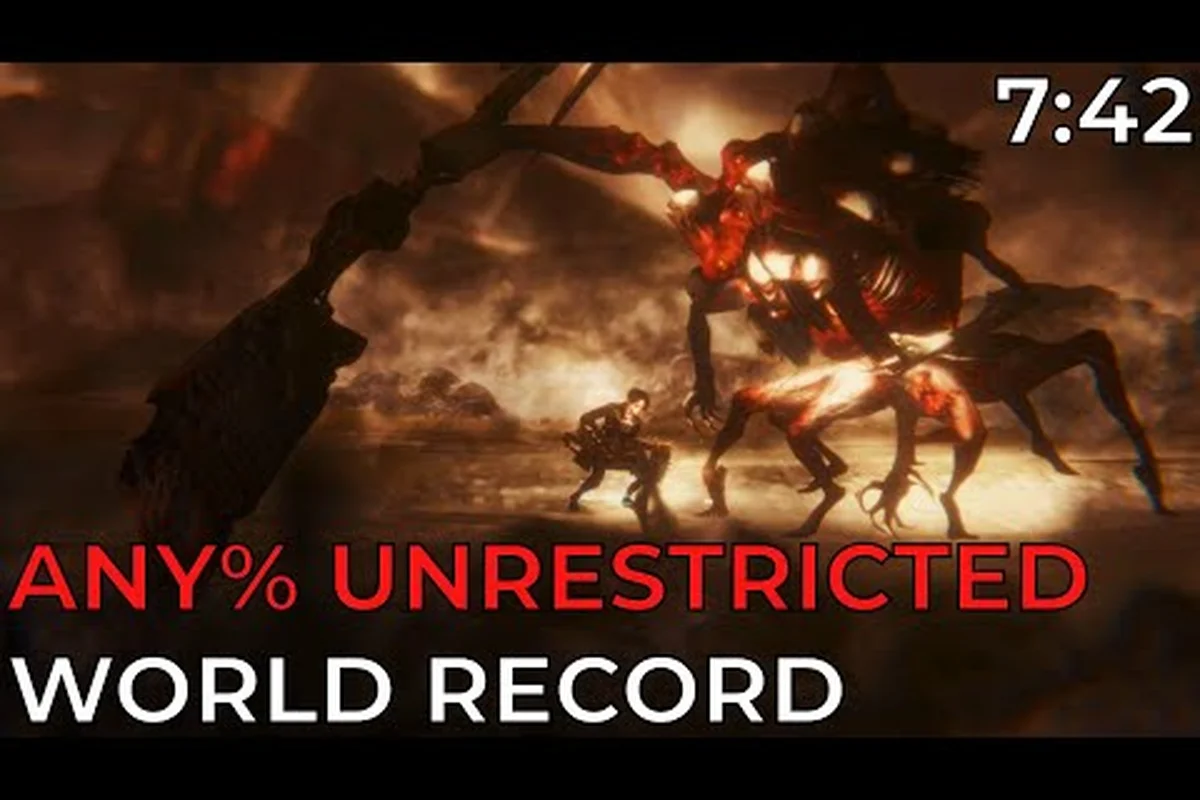
Platforming in Vapor World: Over The Mind is more than just jumping between hand-painted ledges — it's the connective tissue that ties the deflection combat, stealth sections, and dreamscape exploration into one seamless experience. While the game borrows its combat philosophy from Sekiro, its movement system demands the same precision you'd expect from a dedicated platformer, which is why mastering these vapor world over the mind platforming tips early will save you dozens of frustrating falls into the abyss. The nightmare world doesn't hold your hand, and every mist-covered gap or crumbling platform is a test of your spatial awareness and timing.
The key insight that most players miss is that movement in this game is momentum-based rather than purely distance-based. Your jump arc changes depending on whether you're sprinting, crouching, or airborne, and the dreamscape physics reward players who chain movements together rather than treating each jump as an isolated action. This guide breaks down the essential platforming techniques, explains how the world design communicates safe paths, and gives you the environment-reading skills needed to explore every corner of the twisted dream without losing your progress.
Reading the Dreamscape: Core Platforming Mechanics
Deflection Timing Windows: Reading the Crack Break Trigger
Deflection in Vapor World: Over The Mind isn't frame-perfect like Sekiro—the window opens roughly 8 frames before a Projection's strike lands, but the real skill lies in recognizing which attacks trigger a Crack Break. Heavy overhead swings from Brute Projections have a 0.4-second windup before the flash, while fast jab attacks from Wisp Projections flash almost immediately. Practice on the demo's opening dream layer, where the tutorial Projection telegraphs its swing with a white shimmer on its blade. Miss the window and you eat full damage; hit it and you're free to extract Embers with the Id.
Crack Break Positioning: Cornering Projections for Core Extraction
When you trigger a Crack Break, Projections enter a 3-second defenseless state—but their recovery animation pushes them backward. Position yourself between the Projection and a wall before deflecting to trap it, guaranteeing the full extraction animation completes. This matters most against Shield Projections, whose recovery pushes them 2.5 tiles back; without a wall, you'll miss the extraction window and have to re-engage. The boss arena in the trailer's showcase fight has corner pillars specifically designed for this tactic. Practice corner-deflecting on the demo's second Projection encounter to internalize the spacing.
The dreamscape in Vapor World: Over The Mind is built on a simple but deep movement system that rewards deliberate input. Before you can tackle the nightmare world's more hostile terrain, you need to internalize the three core movement states: grounded sprint, airborne drift, and wall interaction. Each state has distinct properties that affect your jump distance, fall speed, and ability to grab ledges.
The most important mechanic to understand is coyote time — the brief window after you walk off a ledge where you can still jump. Community testing suggests this window lasts roughly 100-150 milliseconds, which means you can afford to be slightly late when transitioning from a sprint to a jump. This is crucial in the dreamscape because many platforms are positioned at the very edge of your jump range, and the game expects you to use this grace period to make otherwise impossible gaps.
| Movement State | Jump Distance | Fall Speed | Best Use Case |
|---|---|---|---|
| Standing Jump | Short | Normal | Precise ledge grabs |
| Sprint Jump | Long | Normal | Crossing wide gaps |
| Airborne Drift | Medium | Reduced | Adjusting mid-air trajectory |
| Crouch Jump | Short | Fast | Tight vertical spaces |
Another critical system is the ledge grab window, which activates when you're within roughly half a character height of a platform edge. The game is forgiving here — you don't need pixel-perfect alignment — but you do need to be moving toward the ledge when the window triggers. If you're holding backward or standing still, the grab won't activate, and you'll slide down the wall instead.
The dreamscape also features vapor vents that propel you upward when you stand on them. These are often hidden beneath destructible floor panels or behind breakable walls, so keeping an eye out for subtle visual cues — like a faint shimmer or a slight distortion in the background — will help you locate these vertical shortcuts. According to the official Vapor World: Over The Mind website, these vents are part of the game's "seamless hand-painted dream layers" design philosophy, encouraging players to look beyond the obvious path.
Nightmare World Terrain: Hazards and Environmental Puzzles
The nightmare world flips the dreamscape's gentle platforming on its head by introducing hazards that punish careless movement. While the dreamscape focuses on exploration and verticality, the nightmare world is about precision and timing under pressure. The shifting platforms in this area are the biggest challenge — they move on fixed timers, and mistimed jumps will send you into the void below.
| Hazard Type | Behavior | Counter Strategy |
|---|---|---|
| Shifting Platforms | Move horizontally on a 3-second cycle | Wait for the platform to reach its furthest point before jumping |
| Crumbling Ledges | Collapse 1 second after landing | Sprint across without stopping; never pause mid-platform |
| Spike Traps | Extend from walls on a 2-second cycle | Time your dash through the gap between extensions |
| Vapor Geysers | Erupt every 4 seconds | Use the eruption as a boost to reach higher ledges |
The environmental puzzle design in the nightmare world often combines these hazards in sequence, requiring you to chain multiple movement techniques. For example, a common puzzle setup involves a crumbling ledge followed by a spike trap and then a shifting platform. The solution is to sprint across the crumbling ledge, dash through the spike trap window, and then time your jump onto the shifting platform as it reaches its closest point to you.
One of the most useful vapor world over the mind environment guide tips is to observe before you move. Every hazard in the nightmare world operates on a predictable cycle, and standing still for a few seconds to watch the pattern will always reveal a safe window. Players who rush in blindly die repeatedly; players who take a breath and study the rhythm clear these sections on their first attempt. This is especially true in the Ashen Corridor, where the combination of vapor geysers and shifting platforms creates a complex dance that requires both timing and spatial awareness.
World Design Secrets: How to Explore Every Hidden Path
The world design in Vapor World: Over The Mind is deliberately layered, with multiple vertical levels and hidden paths that reward thorough exploration. The game's dreamscape architecture uses visual language to communicate where you can go — if you see a ledge with a slightly different texture or a platform with a subtle glow, it's almost always a sign that there's a hidden path nearby.
The most important exploration technique is vertical scanning. Most players naturally scan horizontally, looking for paths to the left and right, but this game hides a significant portion of its secrets above and below the main path. When you enter a new area, take a moment to look up at the ceilings and down at the floors. You'll often spot ledges, vents, or breakable surfaces that aren't visible from the main route.
Here are the key vapor world over the mind how to explore techniques that community players have documented:
-
Wall cracks indicate breakable surfaces — attack them or use a charged ability to reveal hidden rooms
-
Vapor trails floating in the air mark the location of invisible platforms
-
Background changes — if the background art shifts slightly, it usually signals a hidden path nearby
-
Enemy placement — Projections often guard secret areas, so if you see an enemy in an odd location, explore around it
-
Silhouette gaps — when you see a gap in the background silhouette that looks like it could fit a platform, there's usually a way to reach it
The dreamscape also features a fast-travel system that unlocks after you reach certain checkpoints, but the real rewards come from exploring on foot. According to community reports, several memory fragments and upgrade materials are only accessible by taking the hidden paths rather than the main route. If you're following our chapter guide for the dream and nightmare areas, you'll notice that many of the optional collectibles are tucked away in these vertical side paths.
Platforming Techniques for Boss Arenas
Stealth Route Priority: Bypassing Projection Patrols
The stealth sections reward route memorization over reaction speed. Projection patrols in the Nightmare World follow fixed loops—the first patrol passes a gap in the hand-painted dream layers every 6 seconds, giving you exactly enough time to cross without triggering detection. The official Discord's speedrun community has mapped these timings: the second patrol's blind spot lasts 4.2 seconds after it turns at the shattered pillar. Use the crawl-space under the broken bridge to skip the third patrol entirely, saving roughly 15 seconds per run. Stealth kills on unaware Projections refund one Ember core, making silent routes economically superior.
Speedrun Route Optimization: Skipping the Mid-Dream Checkpoint
The official speedrun challenge on the Discord server has established that the mid-dream checkpoint in Chapter 2 is a trap for optimization. By maintaining momentum through the first stealth corridor and using a well-timed deflection on the patrolling Wisp Projection, you can trigger a Crack Break that launches it into the gate mechanism, opening the shortcut without the checkpoint detour. This saves 22 seconds per full run. The route requires precise timing—the Wisp's patrol loop must align with your arrival within a 1.5-second window. Watch the demo's speedrun VODs pinned in the Discord's #speedrun-events channel for the exact jump sequence.
Boss arenas in Vapor World: Over The Mind aren't just flat fighting spaces — they're platforming challenges in their own right. The arena geometry changes during boss fights, with platforms collapsing, new ledges appearing, and hazards activating based on the boss's health thresholds. This means your platforming skills directly impact your combat effectiveness, and players who can't move well will struggle even with perfect deflection timing.
The first technique to master is jump-dash canceling. When you jump and immediately dash, you can cancel the dash into another jump, giving you a burst of horizontal movement that's faster than either action alone. This is essential for dodging boss attacks that cover large areas, especially in the nightmare world where arenas are often smaller and more hazardous.
| Boss Arena | Platforming Challenge | Recommended Technique |
|---|---|---|
| Prologue Arena | Collapsing floor sections | Keep moving; never stand still for more than 2 seconds |
| Episode 1 Boss | Rising vapor geysers | Use geyser timing to reach upper platforms |
| Episode 2 Boss | Shifting wall platforms | Wall-jump between platforms to avoid ground attacks |
| Mini Boss Arenas | Spike traps + narrow ledges | Use jump-dash canceling to cross dangerous sections |
Another critical technique is wall-jump chaining. When you wall-jump, you can chain up to three consecutive wall jumps before needing to touch the ground. This is essential for reaching high platforms in boss arenas, especially during phase transitions when the boss creates new vertical spaces. Practice wall-jump chaining in the dreamscape before attempting it in combat — the timing is strict, and you don't want to fumble during a boss fight.
The Crack Break mechanic also has a platforming component. When you break a Projection's guard, you enter a brief slow-motion window where you can reposition. Use this time to move to a safer platform or set up a better angle for your next attack. This is a subtle but powerful technique that separates average players from those who can clear bosses without taking damage.
Advanced Movement: Speedrunning and Optimization
For players who want to push beyond casual exploration, the advanced movement techniques used by speedrunners offer a whole new layer of depth. The movement optimization in Vapor World: Over The Mind is surprisingly deep, with several techniques that shave seconds off your clear times and make traversal feel effortless.
The most impactful advanced technique is vapor-sliding. When you land from a high fall and immediately crouch, you enter a slide that preserves your momentum. This slide can be canceled into a sprint jump, giving you a significant speed boost that carries across multiple platforms. Speedrunners use this to skip entire sections of the dreamscape, and while it's not necessary for normal play, it's incredibly satisfying to master.
Here are the key advanced techniques reported by the speedrunning community:
-
Vapor-slide cancel — Land from height, crouch, then sprint-jump to maintain momentum
-
Double jump storage — Jump, dash, then jump again before landing to preserve your double jump for later
-
Ledge-boost — Grab a ledge, then immediately jump and dash to gain extra height
-
Geyser redirect — Use a vapor geyser's upward force, then air-dash horizontally to reach distant platforms
The nightmare world offers even more advanced movement options, including hazard-boosting — using spike trap timers to time your dashes perfectly and gain small speed boosts. This is extremely risky and not recommended for casual play, but it's a testament to the depth of the movement system.
If you're looking to improve your overall movement, the demo guide is a great place to practice these techniques without the pressure of the full game. The demo includes the prologue and early dreamscape areas, which contain most of the core platforming mechanics you'll need to master.
Environment Interaction: Using the World to Your Advantage
The environment in Vapor World: Over The Mind isn't just scenery — it's a toolkit that you can use to overcome challenges. The interactive environment includes breakable walls, movable platforms, and environmental hazards that can be turned against enemies. Understanding how to use these elements effectively is a core part of the vapor world over the mind environment guide.
The most common environmental interaction is breaking walls. Most breakable walls require a charged attack or a specific ability, but some can be broken with a well-timed dash. The visual cue for breakable walls is a subtle crack pattern that's visible when you're close to the wall. Breaking these walls often reveals shortcuts, hidden rooms, or alternative paths that bypass difficult combat encounters.
| Environment Element | Interaction | Strategic Use |
|---|---|---|
| Breakable Walls | Charged attack or dash | Reveal shortcuts and hidden rooms |
| Vapor Vents | Stand to launch upward | Reach high platforms and skip sections |
| Movable Platforms | Push or pull with interaction key | Create bridges or block enemy paths |
| Environmental Hazards | Trigger by timing | Damage enemies or clear obstacles |
The stealth sections also rely heavily on environmental interaction. You can use vapor vents to reach elevated positions that keep you out of enemy sight lines, and you can break walls to create alternate routes that bypass patrol routes entirely. Our stealth tactics guide covers these techniques in detail, but the key takeaway is that the environment is your ally — use it, don't fight it.
Another important interaction is pushing movable platforms. These are large, blocky structures that can be pushed or pulled to create bridges across gaps or to reach elevated ledges. They're often used in puzzle sections, but they also appear in combat arenas where they can be used to block enemy attacks or create temporary barriers.
Frequently Asked Questions
What is the most important platforming skill to master first?
The ledge grab window is the most important skill because it's the foundation for all other platforming techniques. Once you understand the timing and positioning required to grab ledges consistently, you'll be able to tackle the dreamscape's vertical challenges with confidence. Practice on the early platforms in the prologue before moving to more complex areas.
How do I find hidden paths in the nightmare world?
Scan for wall cracks and vapor trails — the nightmare world mirrors the dreamscape's visual language but darkens it, so cues hide in plain sight. Check vertically above and below the main route; breaking walls and riding vapor vents often reveal optional areas tied to Projection cores.
Can I skip platforming sections by using combat abilities?
Some abilities can help with platforming, but there's no way to completely skip the platforming sections. The dash ability can extend your jump distance, and certain projection skills can create platforms or launch you upward, but the core movement challenges remain. Focus on mastering the basic techniques before relying on ability-based shortcuts.
What happens if I fall into the void?
Falling into the void respawns you at the last activated checkpoint, costing you any unspent Vapor Energy you carried. Your extracted Embers and collected items remain safe, so only your progress toward the next Id upgrade resets. Treat each Dreamscape section as a checkpoint run: scout the platform layout before committing to risky jumps, especially in Nightmare World terrain.
Are there any platforming secrets that unlock special rewards?
Yes, several memory fragments and upgrade materials are only accessible through hidden platforming paths. The dreamscape has a few secret areas that require advanced techniques like wall-jump chaining and vapor-slide canceling to reach. These areas contain some of the best upgrade materials in the game, so they're worth the extra effort if you're looking to fully upgrade your abilities.